
You Solved Revenue. Now Solve Cash Flow.
Your business turns over $1M to $4M, but the bank account doesn't show it. One honest question shows the best way to turn revenue into cash flow and profit.

In this article
You've done the hard part. Your business turns over $1M to $4M a year. The work is coming in. You've built a team, established a reputation and created a business that people want to work with.
But there's a problem. The money in your bank account doesn't seem to match the amount of work you're putting in.
A normal day
You're on site by 6am. You're managing jobs, because things never go to plan. A delivery is late. A client changes their mind. A crew member calls in sick.
Then you get home and start quoting, because if the quotes stop, the work stops. There's paperwork to finish, clients to call and staff who need answers.
Before you know it, another day is gone.
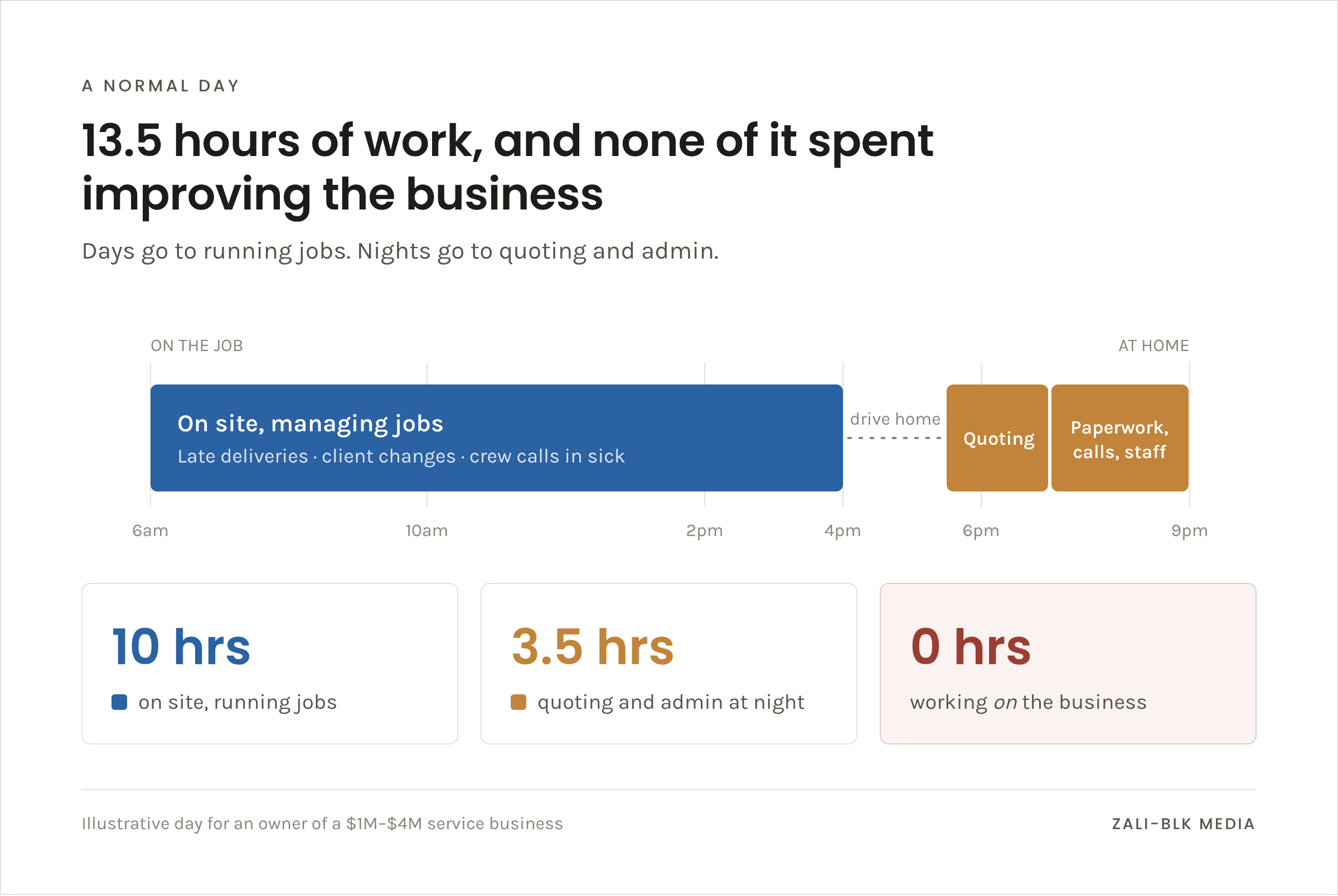
Then you check the bank account. You see what's left over, and it hits you. All that work, all that stress and all that responsibility, and not much to show for it.
If that sounds familiar, you might not have a revenue problem. You've already figured out how to bring money into the business. What you haven't figured out is how to turn that revenue into consistent cash flow and profit.
The real problem: you're wearing all the hats
You're the manager, the salesperson, the problem solver and sometimes the person doing the actual work.
You're the one everyone turns to when something goes wrong.
You know you need help. But you feel stuck between two walls:
- You don't think you have the money to hire an experienced specialist.
- You don't have the time to find the right person yourself.
So you keep doing everything.
You tell yourself you'll hire someone when things settle down. But things never settle down. The business keeps growing, the responsibilities keep piling up and you end up working harder just to keep everything moving.
One question changes everything
To get out of this cycle, ask yourself one honest question:
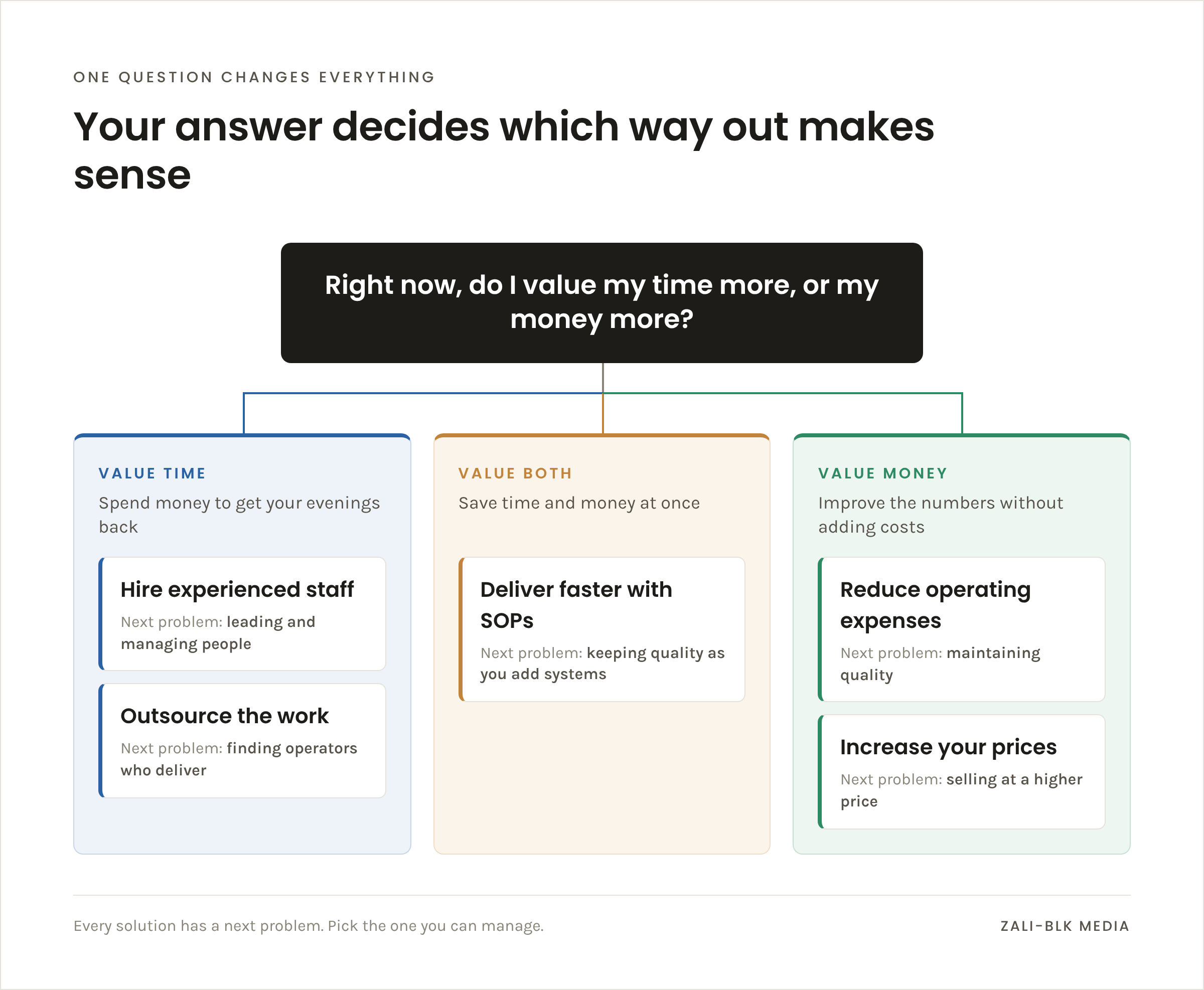
Right now, do I value my time more, or my money more?
There's no wrong answer. But your answer determines which way out makes the most sense.
If you value time more, you'll probably be willing to spend money to get some of it back.
If you value money more, you'll need to find ways to improve the business without adding more costs.
And there's one thing worth remembering: every solution comes with its own next problem. That's normal. The goal isn't to find a solution without problems. It's to replace the problems you're currently dealing with with ones you can manage.
If you value time more
You're tired of doing everything yourself. You'd rather spend money to get your evenings back, take some pressure off and focus on running the business.
You have two options.
1. Hire experienced staff
Bring in people with real experience who can take responsibility for parts of the business.
That might mean hiring a site supervisor to manage projects, an office manager to handle administration or a sales manager to take care of new enquiries and follow-ups.
The idea is simple: get capable people in positions where they can make decisions without needing you every five minutes.
2. Outsource the work
You don't have to hire someone full-time to get help.
There are plenty of business functions you can outsource to specialists, including:
- Estimating and quoting
- Design and drafting
- Bookkeeping and administration
- Project management
- Marketing and lead generation
You pay for the work you need without taking on the full cost of another employee.
If you value money more
Maybe cash is tight. You don't want to take on another wage, contractor or monthly expense just yet.
That's fine. There are still ways to improve the financial position of your business without spending more money.
1. Reduce your operating expenses
Take a close look at where your money goes every month.
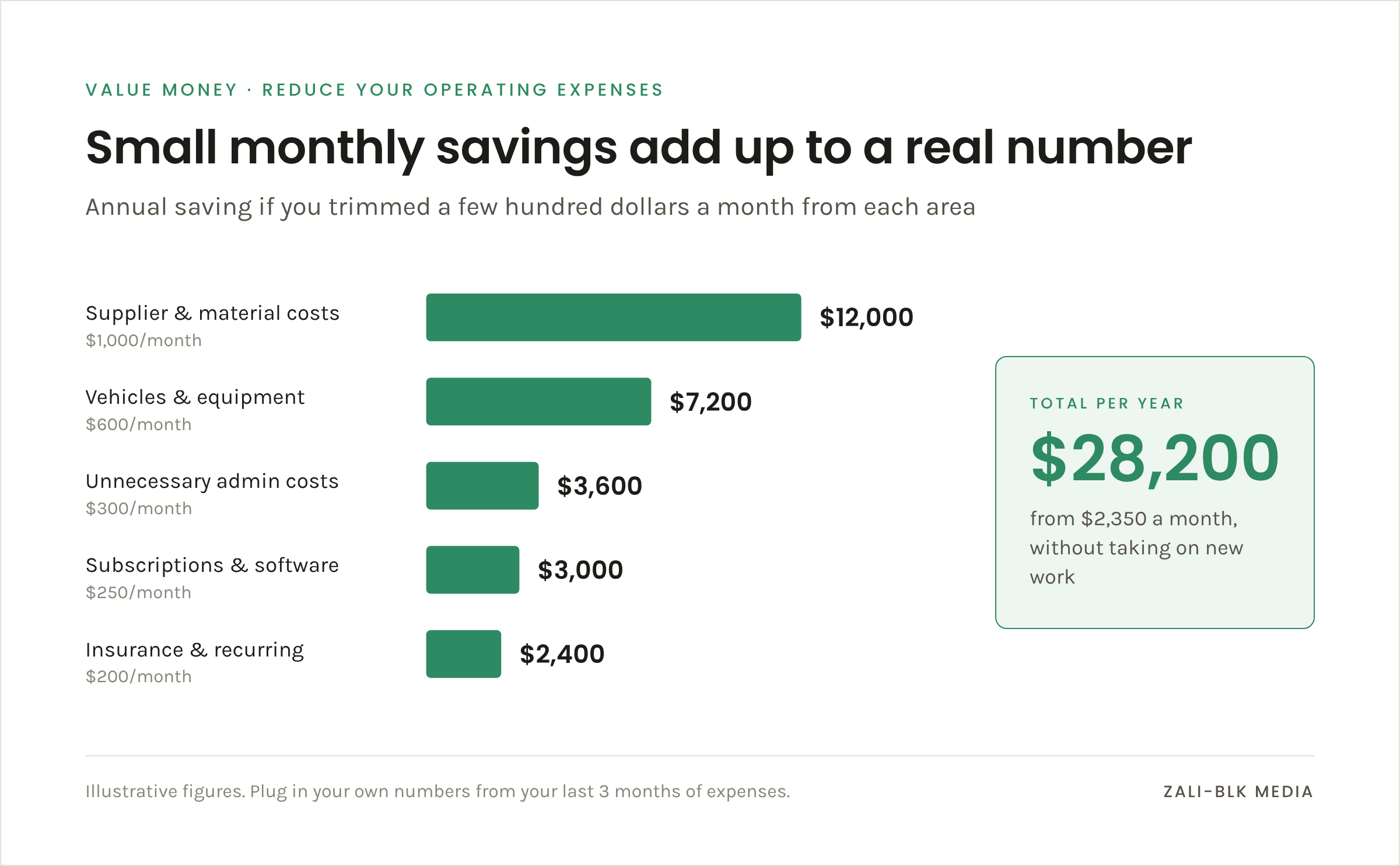
You might be paying for software you barely use, holding equipment that could be hired when needed, or spending more with suppliers than you need to.
Look at your:
- Monthly subscriptions and software
- Vehicle and equipment expenses
- Supplier and material costs
- Insurance and other recurring expenses
- Unnecessary administration costs
Small savings across several areas can make a meaningful difference over a year.
2. Increase your prices
If you're consistently busy but struggling to make enough money, there's a chance you're not charging enough.
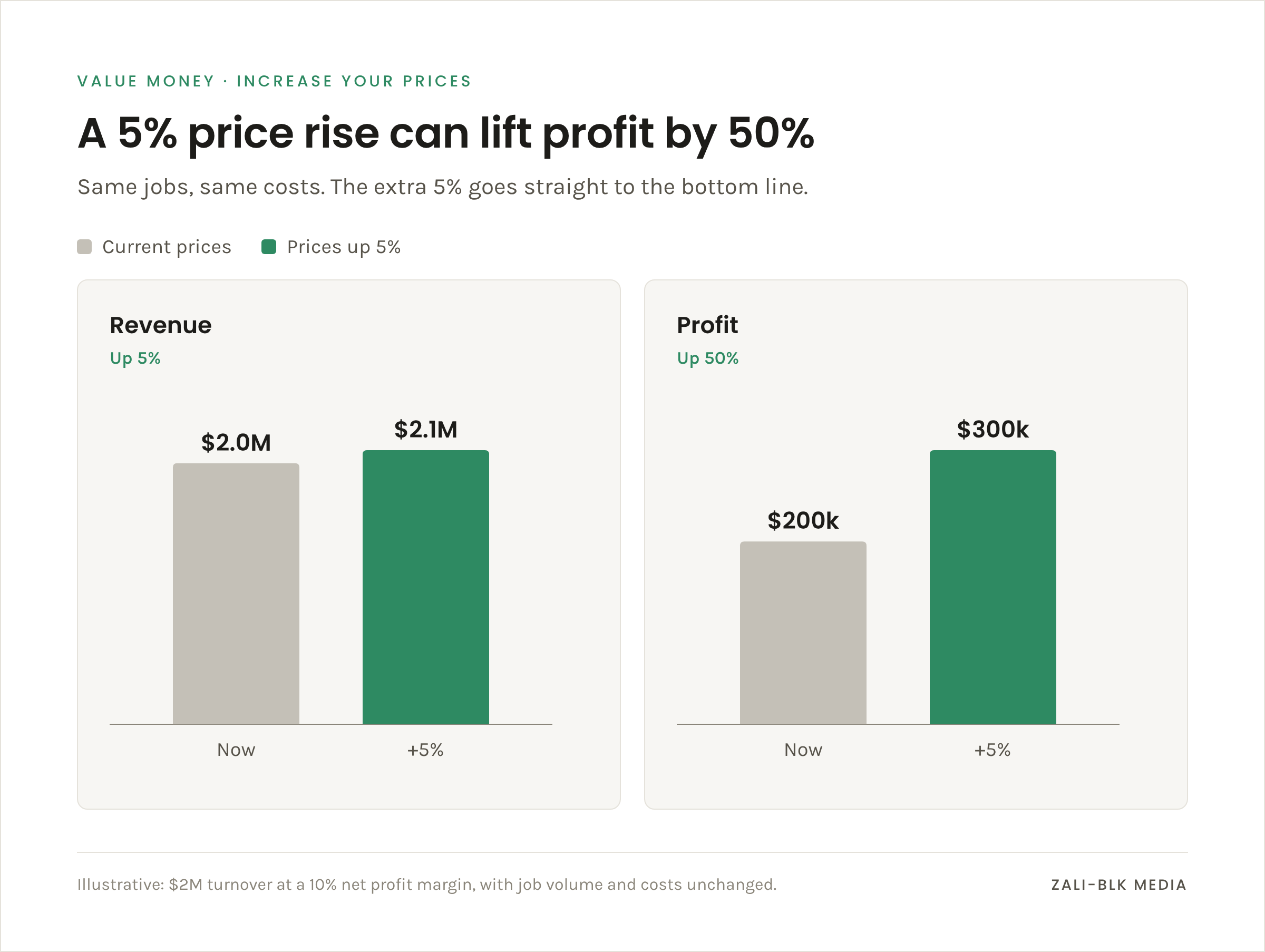
Increasing your prices means you can generate more revenue from the same amount of work.
You don't necessarily need more clients, more employees or more projects. Sometimes you just need to make more from the work you're already doing.
Higher prices can mean a smaller pool of potential customers. You'll need to communicate your value, build trust and get better at handling price objections.
Your customer acquisition costs may also increase as you target buyers who are willing to pay more. You might spend more on advertising while working out which channels and messages attract the right customers.
The option most people miss: deliver faster
This is one that can save you both time and money.
In almost every service-based business, time is a cost.
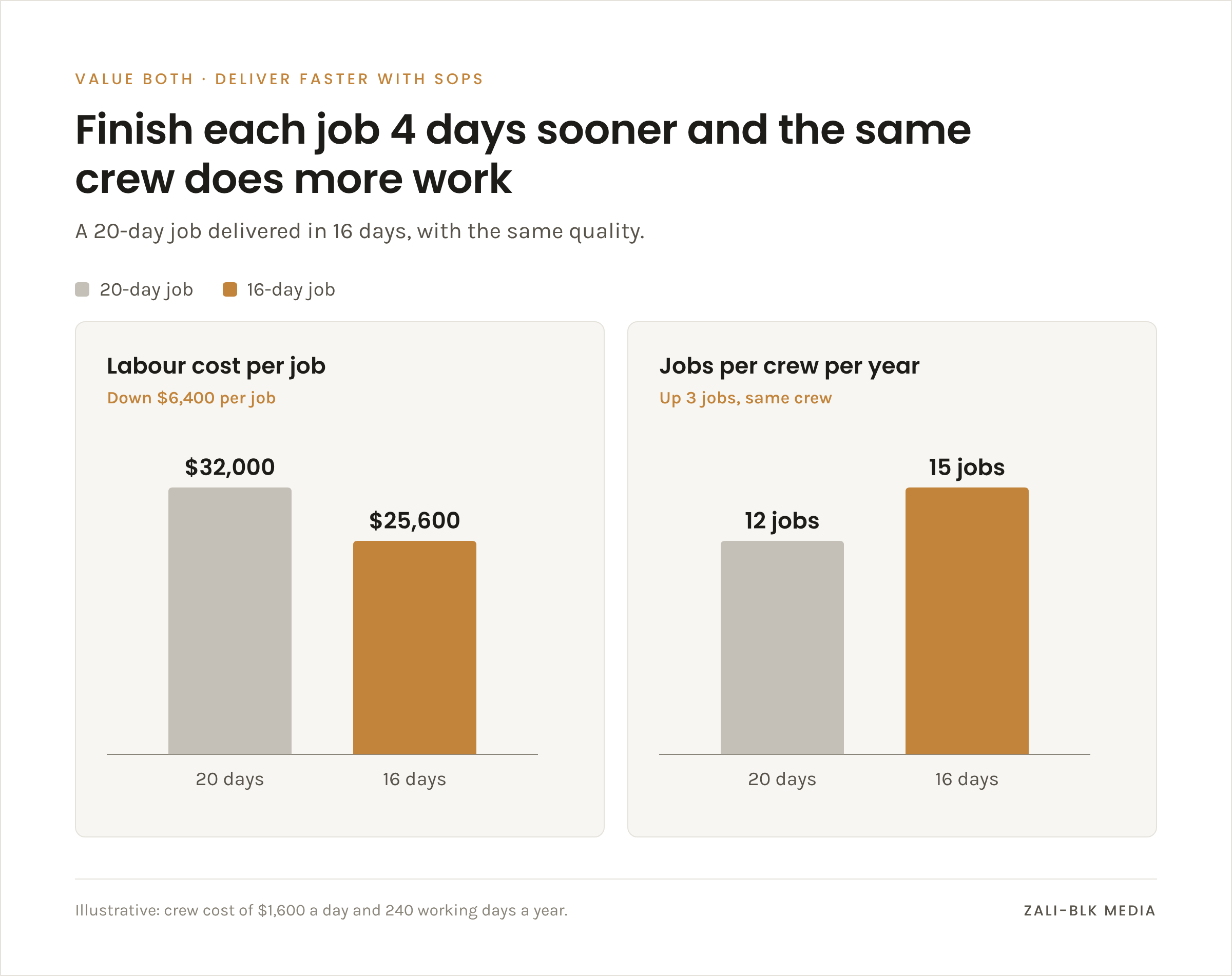
The longer a job takes to complete, the more you spend on wages, equipment, administration and client management.
Think about it. Every extra day on a project means more coordination, more opportunities for something to go wrong and a longer wait before you can move on to the next job.
If you can deliver the same quality of work in fewer days, you improve your capacity without necessarily increasing your overheads.
Your team can move onto the next project sooner, your labour costs per job can come down and you can potentially complete more work with the same resources.
How to do it: create standard operating procedures (SOPs)
SOPs are standard operating procedures. They're simply written instructions that explain how to complete a task consistently.
Instead of relying on someone remembering how things should be done, you document the process so everyone can follow it.
For example:
- How to handle a new customer enquiry
- How to prepare a quote or proposal
- How to schedule and allocate work
- How to set up a project
- How to manage customer updates
- How to complete quality checks
- How to hand over a finished job
The goal is to remove unnecessary decision-making, reduce mistakes and stop the business from relying on you to answer the same questions every day.
When everyone knows what needs to happen and how to do it, things move faster.
New employees can learn more quickly. Existing employees become more independent. And you spend less time fixing problems that could have been avoided in the first place.
Your options at a glance
| If you value... | Option | The next problem |
|---|---|---|
| Time | Hire experienced staff | Leading and managing people |
| Time | Outsource the work | Finding operators who deliver |
| Money | Reduce operating expenses | Maintaining quality |
| Money | Increase your prices | Learning to sell at a higher price |
| Both | Deliver faster with SOPs | Maintaining quality as you introduce systems |
This applies to almost any service business
We work with landscaping and pool construction companies, but these challenges aren't unique to those industries.
Builders, plumbers, electricians, mechanics, consultants and other service-based businesses face the same problems.
Once you've figured out how to generate consistent revenue, the next challenge is building a business that can turn that revenue into healthy cash flow and profit without relying on you to do everything.
So pick one thing to work on this week:
- Decide whether you value your time or your money more right now.
- Choose one option that addresses your biggest problem.
- Think about the next problem it might create and plan for it before it arrives.
You didn't start a business to work every hour of the day, carry every responsibility and wonder where all the money went.
Sometimes, the next stage of growth isn't about doing more. It's about making better use of what you've already built.
Want more of the right projects coming into your landscaping or pool construction business while you work on the back end? Get in touch and let's see if we're a fit.
A little about the author

I'm Dan De sousa, founder of Zali-Blk Media. I work with established landscaping and pool construction businesses, helping them generate more quality projects through Google Ads and better marketing systems.
Before starting Zali-Blk in 2021, I spent 8.5 years in the Australian Defence Force as an Electronics Technician before moving into software development and digital marketing.
Over the past five years, I've worked closely with business owners across the landscaping and pool construction industries. I've seen firsthand the challenges that come with growing a service-based business, from generating consistent work to managing teams, improving profitability and building systems that actually work.
I share what I've learned here to help business owners make better decisions and build stronger businesses.