
The Number 1 Reason Landscapers Fail With Google Ads (It's Almost Never the Leads)
When Google Ads doesn't seem to work, most landscapers blame the leads. The bigger problem is giving up before homeowners are ready to decide.

In this article
- 1. Homeowners Take Time to Decide, Especially on Bigger Landscaping Projects
- 2. There's Very Little Competition Left After Four Follow-Ups
- 3. Why Google Ads Agencies Recommend a Three-Month Commitment (And Why Six Months Makes More Sense)
- 4. What This Means for Your Landscaping Business
- 5. The Number 1 Reason Landscapers Fail With Google Ads
- Frequently Asked Questions
When Google Ads for landscapers doesn't work, the first thing most business owners question is the leads.
Are they good enough? Are they the right type of customer? Is Google bringing in the wrong people?
Sometimes, those questions are fair. Poor targeting, weak landing pages and the wrong keywords can all affect campaign performance.
But there's another problem we see far more often than people realise.
Landscapers give up too early.
They invest in Google Ads, start receiving enquiries and expect projects to come through within a few weeks. When the bigger jobs don't start straight away, they assume something isn't working.
They turn off the ads, stop following up or move on to another marketing approach.
The problem? Some of their best opportunities haven't even made a decision yet.
If you're running an established landscaping or pool business, understanding how long homeowners take to make decisions could change how you approach marketing.
1. Homeowners Take Time to Decide, Especially on Bigger Landscaping Projects
Think about what happens when someone wants to spend $100,000 or $200,000 on their backyard.
They're not buying a new lawn mower. They're making a major investment in their home.
They might need to speak with their partner, compare a few builders, organise finance, review designs or wait until the timing is right.
Some homeowners are ready to start straight away. Others are still planning what they want their outdoor space to look like.
This is why the value of a project matters when looking at how long it takes to turn a landscaping enquiry into a sale.
In our own enquiry data, we can see that not everyone is looking to start immediately.
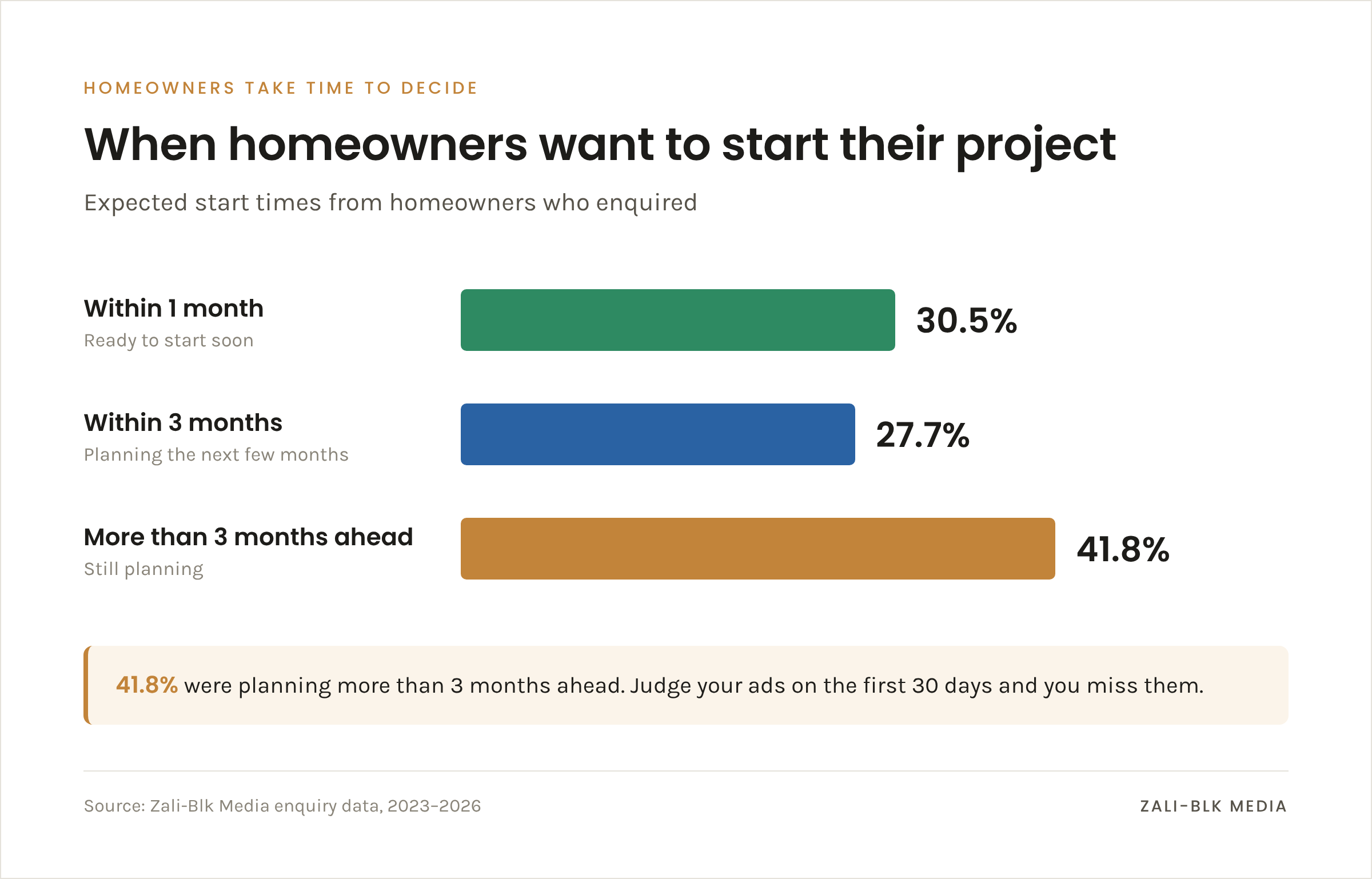
According to Zali-Blk Media enquiry data, 2023–2026, the expected start times of homeowners were:
- 30.5% wanted to get started within 1 month.
- 27.7% wanted to get started within 3 months.
- 41.8% were planning more than 3 months ahead.
Think about that last number.
41.8% of the enquiries in our data were planning more than 3 months ahead.
That means a large share of homeowners are not necessarily ready to sign a contract or start construction when they first contact you.
It doesn't mean they're bad leads. It means they're at a different stage of the buying process.
And if you're only measuring your Google Ads by how many projects start in the first 30 days, you're likely missing part of the picture.
2. There's Very Little Competition Left After Four Follow-Ups
Getting an enquiry is only the first part of the sales process.
What happens after that enquiry comes through is just as important.
Let's say a homeowner contacts your business about a $120,000 landscaping project.
You call them that afternoon, but they don't answer. You send an email and hear nothing back.
What happens next?
For many businesses, that's where the follow-up stops.
They assume the homeowner isn't interested and move on to the next enquiry.
But commonly quoted sales statistics suggest that many sales require more persistence:
- 80% of sales need 5 or more follow-ups.
- 44% of business owners stop after just 1 follow-up.
- 92% of business owners stop after 4 follow-ups.
These are commonly quoted sales statistics, not figures from our own enquiry data. They help highlight an important point about following up.
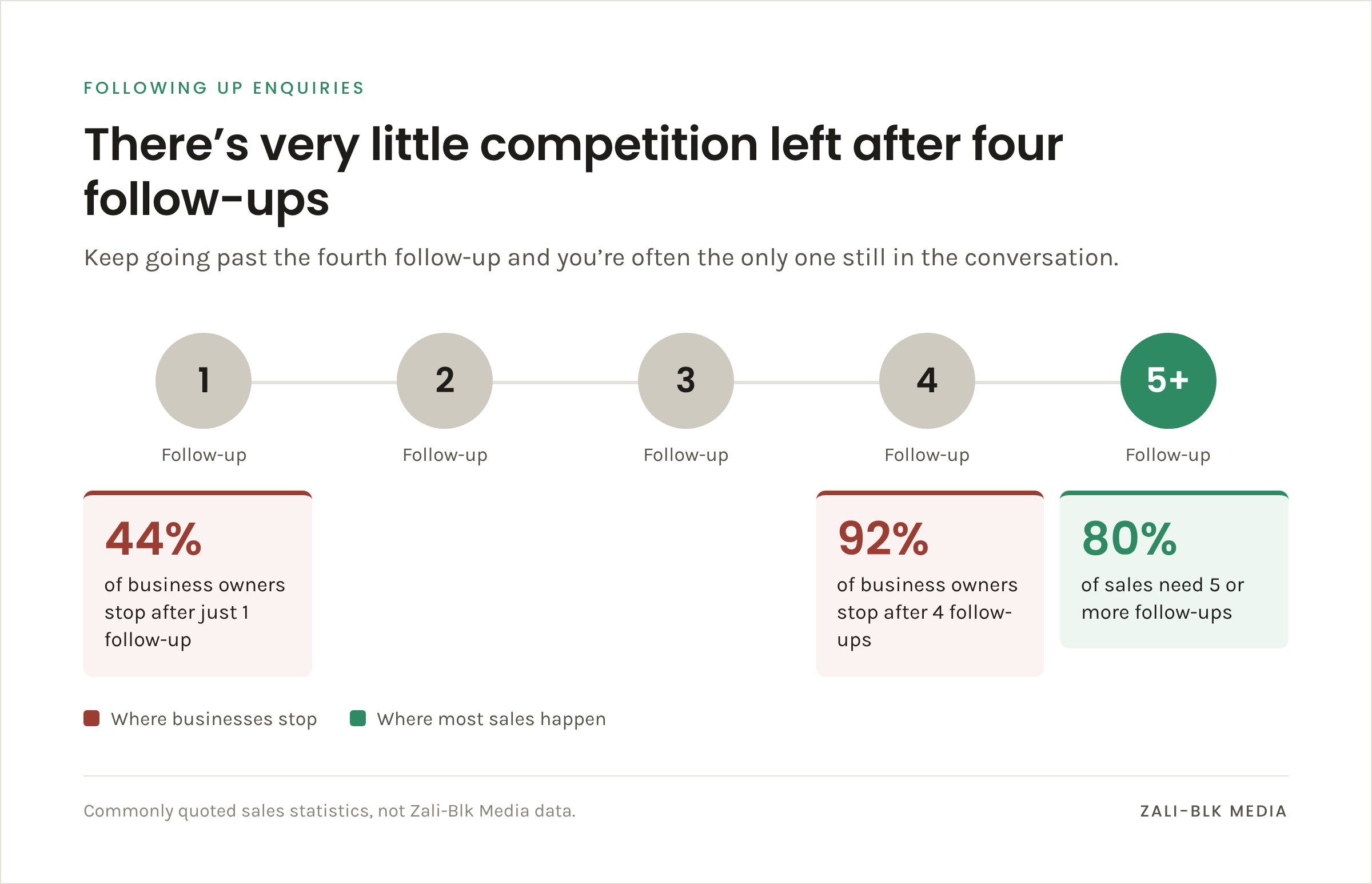
Most businesses don't follow up for long enough.
Think about the opportunity here.
If a homeowner has approached three landscaping companies, the business that keeps communication open and follows up professionally has more chances to stay in the conversation.
That doesn't mean calling someone every day or sending messages until they get annoyed.
It means having a simple process.
Call them when the enquiry comes through. If they don't answer, send a message. Try again a few days later. Follow up with useful information, answer questions and check whether their plans have changed.
Sometimes, a homeowner won't be ready for another two or three months. That's fine. Keep the relationship open without putting pressure on them.
One of the biggest mistakes we see is treating a lack of immediate response as a lack of interest.
3. Why Google Ads Agencies Recommend a Three-Month Commitment (And Why Six Months Makes More Sense)
There's a reason many Google Ads agencies ask for a minimum three-month commitment.
It's not simply about protecting the agency's monthly revenue. A reasonable commitment should protect your investment as well.
When a new campaign starts, there are several things that need time to develop.
- Campaign setup: Keywords, locations, ads and conversion tracking need to be organised correctly.
- Early data: You need enough information to understand what people are searching for and which enquiries are coming through.
- Campaign improvements: Search terms, ads and landing pages can be reviewed and improved as more data becomes available.
- Sales follow-up: Homeowners need time to respond, compare options and make decisions.
Three months gives a campaign some room to develop. But if we're being honest, we should probably be talking about six months instead.
Why?
Because getting an enquiry and turning that enquiry into a signed landscaping contract are two different things.
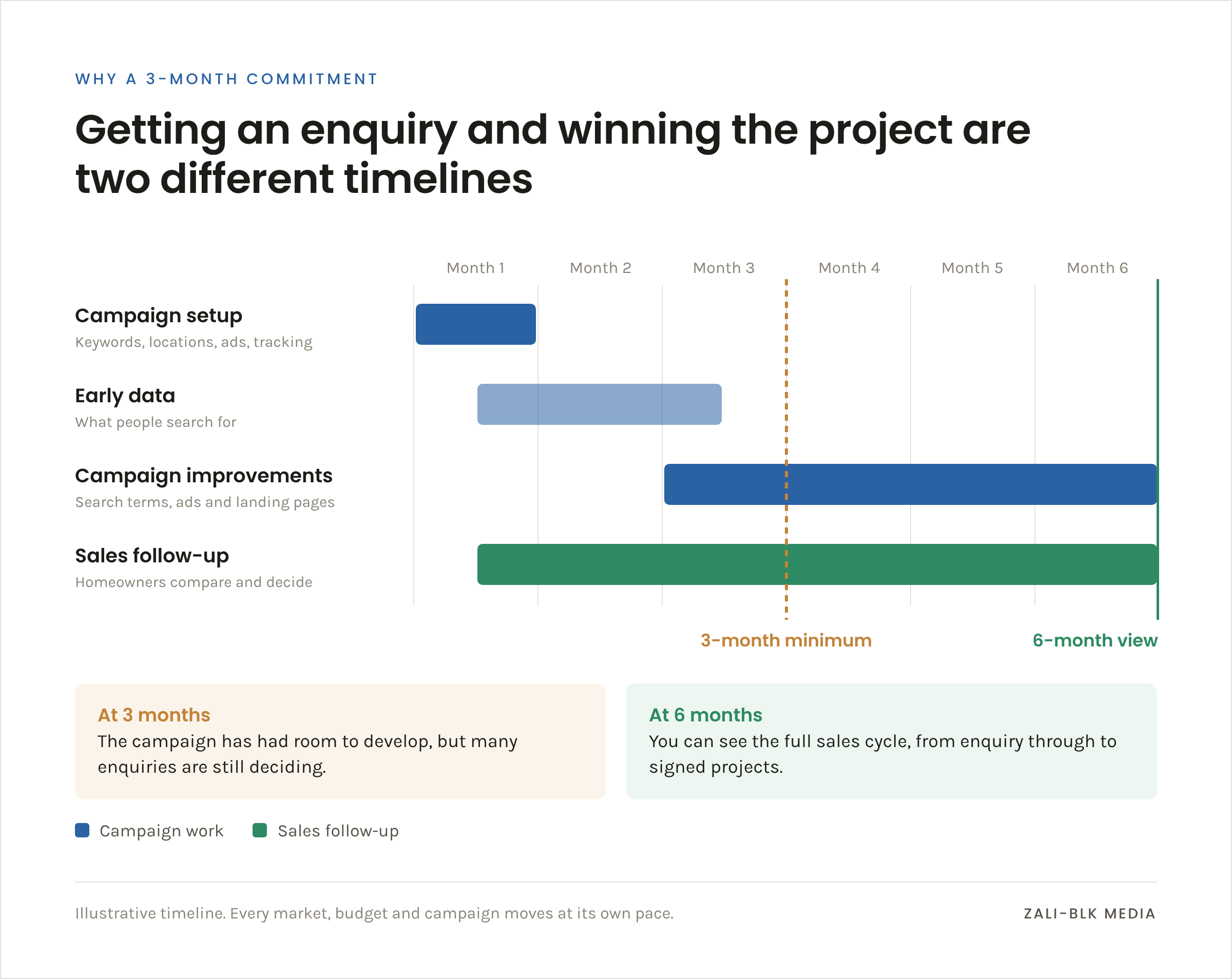
A campaign might start generating enquiries in its first few weeks. But the projects you're actually looking for could take several more months to progress.
Imagine switching off a campaign after three months when some of the homeowners it attracted are only now ready to move forward.
You've paid to get in front of those people, but you've stopped creating new opportunities just as the earlier ones are progressing.
This is particularly important for businesses targeting $50,000 to $250,000 landscaping and pool construction projects.
These are considered purchases. Homeowners need time to make decisions, and your marketing approach needs to account for that.
A three-month commitment can be a sensible starting point. But judging the full value of your marketing over six months gives you a much better view of the bigger picture.
4. What This Means for Your Landscaping Business
If you're currently running Google Ads, or considering investing in them, there are three things worth taking away from this.
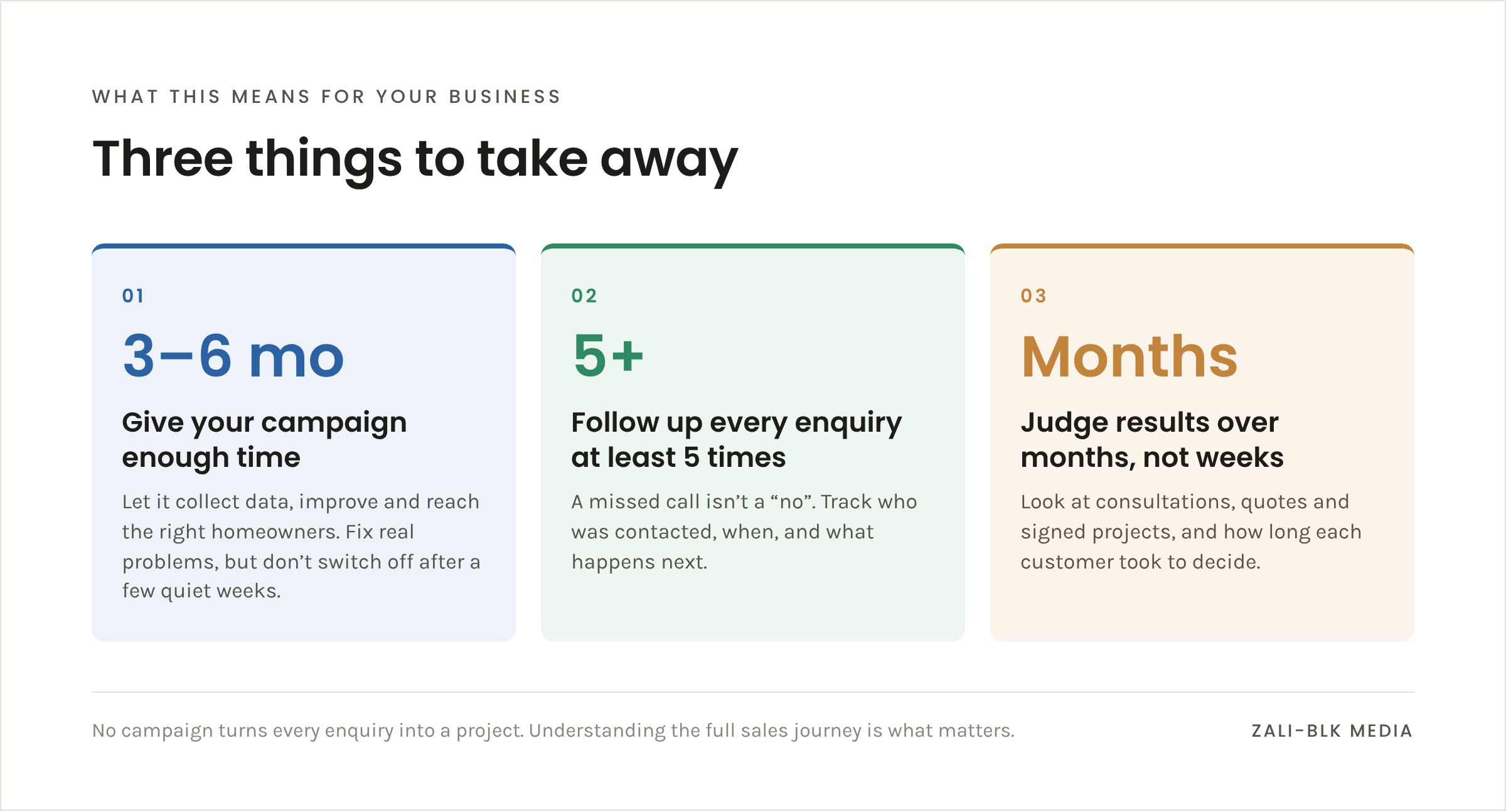
Give your Google Ads campaign enough time
Don't expect a new campaign to prove its full value within a few weeks.
Give it time to collect useful data, make improvements and attract the right type of homeowner.
That doesn't mean letting a poor campaign run without question. Your agency should still be reviewing performance, identifying problems and making changes along the way.
But there's a difference between identifying a genuine problem and switching everything off because the first few weeks haven't produced a signed contract.
Follow up every enquiry at least five times
Every enquiry deserves a proper follow-up process.
Even if someone doesn't answer the first call, that doesn't mean they're not interested.
For bigger projects, consider keeping in touch over several weeks or months. Make sure your team knows who has been contacted, when they were contacted and what needs to happen next.
A simple CRM or lead management system can make this much easier.
Most importantly, don't let good enquiries disappear simply because nobody remembered to call them back.
Judge marketing results over months, not weeks
When reviewing Google Ads, look beyond the number of enquiries received that month.
Look at the quality of those enquiries, the budgets homeowners have discussed, how many have progressed to consultations and quotes, and how many have eventually become customers.
You should also consider how long those customers took to make a decision.
Not every enquiry will turn into a project. That's normal. But understanding the full sales journey helps you make better decisions about where your marketing budget is going.
It also helps to understand that not every homeowner is at the same stage of awareness. Some know exactly what they want, while others are still researching their options.
We've covered this in more detail in our article on the five stages of customer awareness, including why different homeowners need different messages before they're ready to enquire.
5. The Number 1 Reason Landscapers Fail With Google Ads
Google Ads can be a valuable source of new opportunities for established landscaping and pool businesses.
But it needs to be approached with the right expectations.
You need a campaign that targets the right homeowners, a landing page that gives them a reason to contact you, and a sales process that follows up properly.
Most importantly, you need to give those opportunities time to develop.
Too many businesses judge their marketing by what happens in the first few weeks. They see enquiries that haven't converted yet and assume the campaign isn't working.
Then they switch it off, move on and start the process all over again.
The reality is that some of the best projects take months to secure. The homeowner might need more time, more information or a few conversations before they're ready to move forward.
Landscapers don't usually fail at Google Ads because of the leads. They fail because they give up just before they're about to get the reward.
If you're looking to build a more consistent source of quality landscaping or pool construction enquiries, it pays to think beyond the next 30 days.
At Zali-Blk Media, we work with established Australian landscaping and pool businesses to build long-term client acquisition plans using Google Ads and dedicated landing pages.
If you'd like to discuss what a longer-term approach could look like for your business, talk to Zali-Blk Media.
Frequently Asked Questions
How long does Google Ads take to work for landscapers?
Google Ads can start generating enquiries within the first few weeks, depending on the market, budget, competition and campaign setup. However, turning those enquiries into signed landscaping projects can take several months. It's important to separate the time it takes to generate an enquiry from the time it takes to win the project.
How many times should I follow up a landscaping enquiry?
Aim for at least five follow-ups where appropriate. If a homeowner doesn't answer your first call, try again, send a message and follow up over the coming days and weeks. For larger projects, staying in touch over several months can also make sense. Keep your communication helpful and respectful.
Why do Google Ads agencies ask for a minimum commitment?
Google Ads campaigns need time to collect data, identify opportunities and improve. Homeowners also need time to make decisions, especially when planning larger landscaping projects. A three-month commitment provides an initial period to develop a campaign, while six months can give you a better view of its performance across the full sales cycle.
Is Google Ads worth it for pool builders?
Google Ads can be worth considering for pool builders who want to reach homeowners actively searching for pool construction, renovations and related services. The key is targeting the right searches, having a landing page that speaks to the projects you want and following up enquiries properly. As with landscaping, you need to consider the full sales cycle rather than judging results on immediate sales alone.
